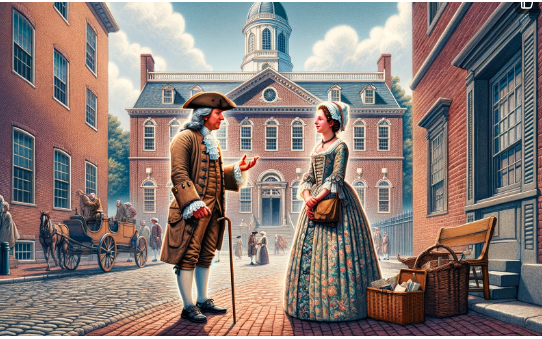
Document 10: Debates at 1787 Constitutional Convention: The ‘Bait and Switch’ that Made a Nation
A Step Back in Time Imagine traveling back to the summer of 1787 in Philadelphia, where significant history was unfolding. The Pennsylvania State House, now known as Independence Hall, served as the stage for a pivotal gathering that would shape the nation. This Constitutional Convention was initially convened to amend…
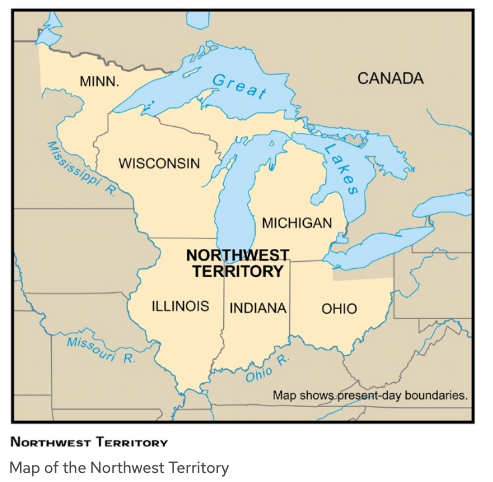
Document 9: Northwest Ordinance and the Confederation Congress: Expanding a Nation, 1787
Although the Confederation Congress may have had little authority and did very little, it did one thing very well in passing the Northwest Ordinance to set up the future states with following states receiving bits of the land and setting up their governance by the principles laid out in the…

Document 8: Annapolis Convention, 1786 – Quiet Beginnings of a Constitutional Revolution
In a room where ostensibly nothing happened, the Annapolis Convention of 1786 quietly set the stage for a monumental shift in American history. In the aftermath of the Revolutionary War, the young United States, bound by the Articles of Confederation, was fraught with internal discord, particularly in its commercial dealings.…

Document 7: The Articles of Confederation: America’s First Governing Experiment
When the ink dried on the Declaration of Independence in 1776, it was more than just a symbolic break from British rule; it was the dawn of a new, uncertain era for the thirteen colonies. The journey from declaring independence to forming a robust national government was fraught with challenges,…
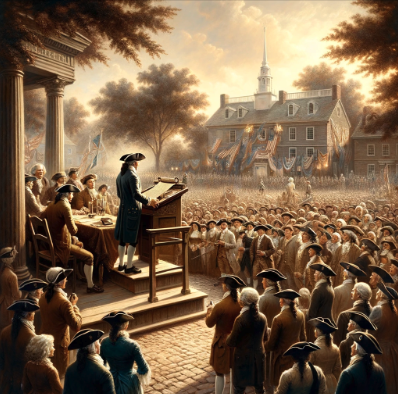
Document 6: A Witness to Revolution: The Declaration of Independence’s Defiant Leap
Document 5 on our path to the Founding of the American Republic was Thomas Paine’s “Common Sense.” But, Document 6 in our list, the Declaration of Independence, was America’s point of no return to our native England. Call it a “tipping point,” paradigm shift, crossing the Rubicon, or the die-is-cast…
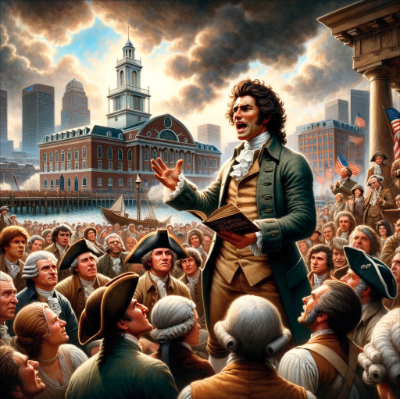
Document 5: Thomas Paine’s “Common Sense”: Catalyzing the American Revolution
Introduction “Common Sense,” a pamphlet by Thomas Paine published in January 1776, stands as one of the most influential writings in American history. Amidst the tumultuous events of the American Revolution, Paine’s work not only captured the mood of the colonies but also profoundly shaped their path to independence and…

Document 4: The Virginia Declaration of Rights – Precursor to the US Constitution’s Bill of Rights
This is the fourth installment of historical antecedents to the Constitution of the United States. Prior documents were: the Magna Carta, the Mayflower Compact, the English Bill of Rights, and a foray into an important legal case (Bushell’s Case). Just nine to go, with Thomas Paine’s Common Sense next!! Introduction…

Document 3: English Bill of Rights: Context, Provisions, Impact, and Legacy
This is my third article on the historical antecedents of the United States Constitution. The Magna Carta and the Mayflower Compact have previously been addressed, plus a stop-over into the Rule in Bushell’s case (independence of the jury, freedom of assembly, and freedom of religion). Here, we get a two-for-one…

AntiSemitism – Neither recent, nor justified. From the Assyrian Captivity (740 BCE) to the Crushing of the Bar Kokhba Revolt (132-35 CE)
740 BCE – Assyrian Captivity: Several thousand Israelites from Samaria were resettled as captives when the Northern Kingdom of Israel was conquered by the Neo-Assyrian Empire. 586 BCE – Neo-Babylonian Empire’s Conquest: King Nebuchadnezzar II’s reign saw the destruction of the temple in Jerusalem, capture of the Kingdom of Judah,…