
 China steals.
Always has.
Always will.
Chinese buyers are bypassing U.S. export restrictions to obtain Nvidia’s latest AI chips, underscoring the challenge for the Trump administration in restricting advanced American technology. Traders route Blackwell-equipped computing systems through third parties in nearby regions, with some promising delivery in six weeks. These workarounds highlight the ineffectiveness of U.S. efforts to block China from acquiring high-end AI processors.
Despite U.S. export controls, Beijing is evading restrictions to obtain Nvidia’s Blackwell AI chips, the most advanced processors yet—critical to artificial intelligence (AI) and artificial general intelligence (AGI), the next frontier where machines think and reason like humans. The Blackwell chip is a quantum leap forward. If it can steal it, China knows it will save billions in research and development and gain a massive technological advantage overnight. For a few dollars, they shortcut the race, and they’re in. Period. Meanwhile, Washington keeps issuing ineffective restrictions, pretending they work.
But this isn’t just about AI. China’s Belt and Road Initiative has systematically secured global trade routes, locking down ports, energy corridors, and supply chains worldwide. It took control of both ends of the Panama Canal under our noses—until Trump fought back. Now, Beijing is building artificial islands to militarize the South China Sea, staking a claim to one of the world’s most vital trade arteries. This isn’t competition—it’s conquest.
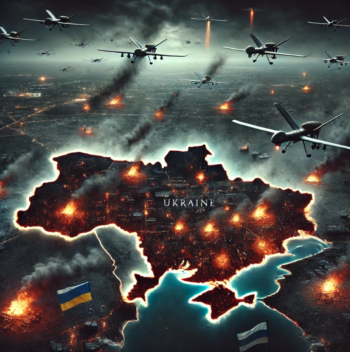
And yet, America is distracted. Ukraine and the Middle East are existential diversions from the real, most dangerous enemy: China. These conflicts must be resolved—not just for their own sake, but because they are draining American focus, money, and military assets while China quietly advances.
Zelensky’s petulance at the White House was prompted by Democratic Senators who cared little about the world stage—just their own little me-too power grab. Again.
Yes, the Middle East is a humanitarian catastrophe, but let’s not fool ourselves—its chaos is rooted in decisions made a century ago. After World War I, the Balfour Declaration and colonial carve-ups prioritized Western economic interests over tribal, ethnic, and religious realities, sowing instability that still fuels today’s conflicts. The same mistake plays out in Eastern Europe, where old fault lines were ignored, and now the world is forced to deal with the consequences. We are inheriting the wind of those short-sighted policies.
China, however, has a long memory. It has never forgotten the Opium Wars, Western subjugation, and its so-called “Century of Humiliation.” Unlike the West, it plays the long game. While America expends its strength on secondary battles, China is moving methodically, relentlessly, toward dominance.
The AI race, the quantum computing race, and energy supremacy are not about competition. They are about survival. The nation that wins controls the future. If the U.S. loses, we cede the next century to a regime that does not forgive, does not forget, and does not play fair.
Trump understands this. His focus on the Pacific is the right move, but time is running out. Every stolen chip, seized port, and miscalculation that keeps us distracted from the real war ahead brings China closer to victory.
Word Count: 335
Sourced: Wall Street Journal, News Items, by John Ellis.